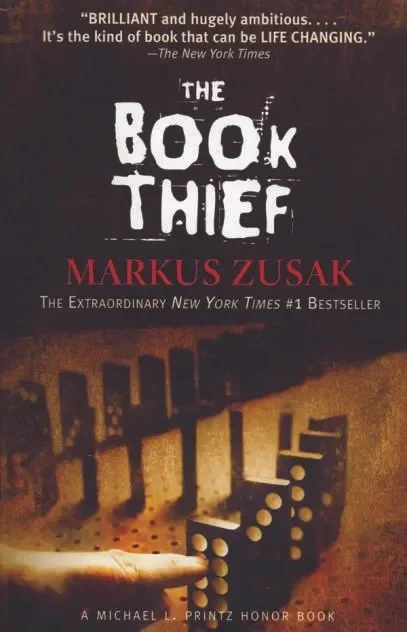
Rereading a book after a time-lapse is like diving into a familiar yet irrevocably altered world.
I'm rereading Markus Zusak's The Book Thief. Despite winning the Printz Award for excellence in YA literature, I don't relate to Zusak's book as young adult. It's a cross-over, one of these layered, generous, enlightening stories set in World War II, and while I'm not going to debate the whole pigeon-holing of how books are marketed, this is the kind of book I love, because it defies a narrow categorisation based on a potential audience.
Back to the book—the first time I read it I was hesitant about the voice of Death. It was a jarring note in the story: reaping souls between this world and the next, disconnected yet participatory, observing with an altered perception of sensation; it felt a little contrived despite the malleable inventiveness of Zusak's language. Happily, this time round, it hooked me in from the start. And what a great start! From the Prologue:
“It's just a small story really, about amongst other things:
a girl
some words
an accordionist
some fanatical Germans
a Jewish fist-fighter
and quite a lot of thievery
I saw the book thief three times.”
A love of words and books, the precariousness of life, the treachery of death, the ethical dilemmas and threat of living under fascism, fighting for what you love and learning to see through difference to appreciate our shared humanity—this and much more could be added to the list above. Not quite a “small” story.