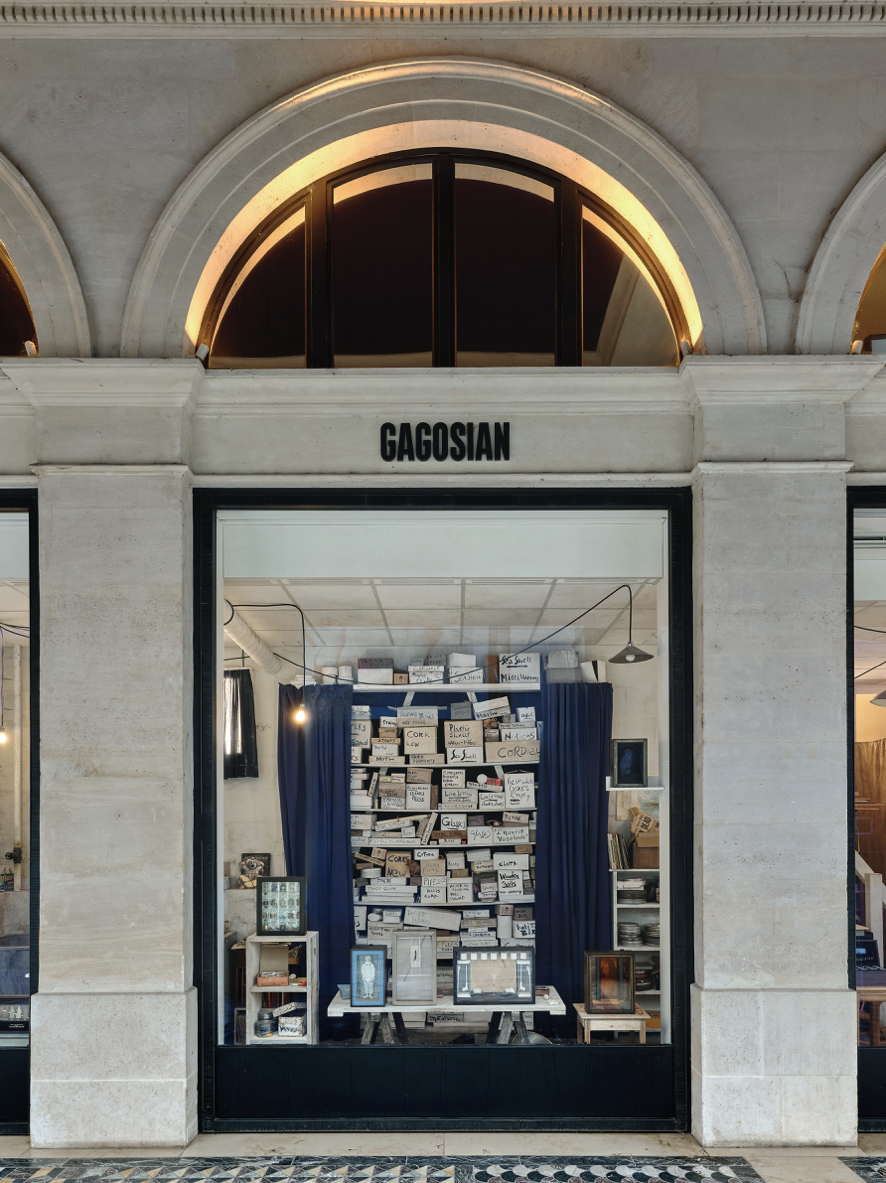
An unusual and delightful exhibition has opened in Gagosian’s Paris gallery at 9 rue Castiglione, conceived by curator Jasper Sharp and American filmmaker Wes Anderson, The House on Utopia Parkway: Joseph Cornell’s Studio Re-Created by Wes Anderson.
Cornell created his artwork, most notably his assemblage boxes, in the basement of his family’s home at Utopia Parkway. The exhibition re-creates his studio which was lined with shelves of whitewashed shoeboxes and tins filled with objects Cornell collected while visiting Manhattan bookstores, antique shops, and neighborhood dime stores. Cornell referred to this collection of prints, feathers, maps, marbles, toys, seashells, and other ephemera as his “spare parts department.”
Wes Anderson alongside exhibition designer Cécile Degos, re-created Cornell’s studio featuring more than three hundred objects and curiosities from Cornell’s own collection. Included are several of the artist’s poetic box assemblages, such as Pharmacy (1943), Untitled (Pinturicchio Boy) (c. 1950), one of the Medici series; A Dressing Room for Gille (1939), and Blériot II (c. 1956).
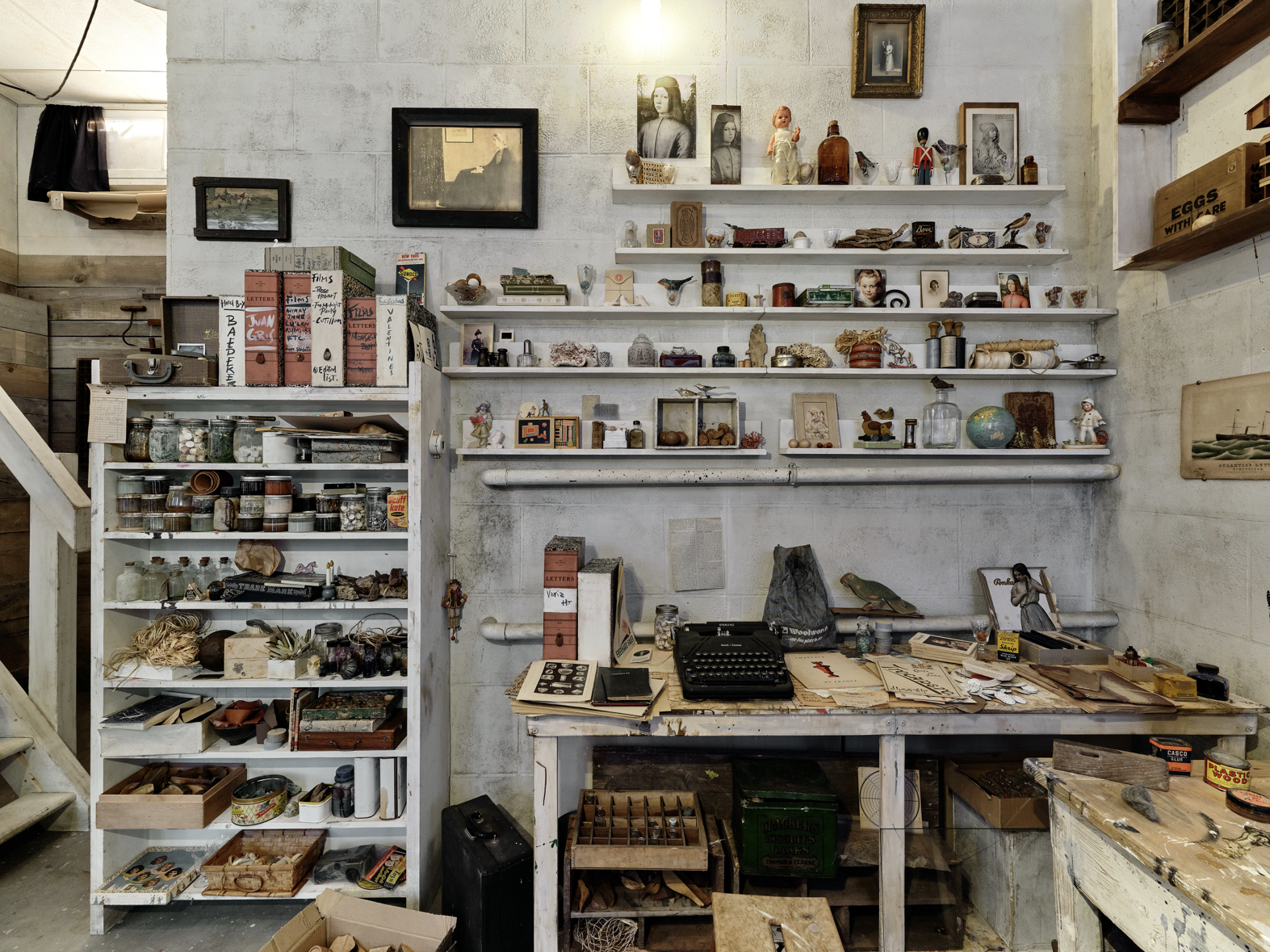
Installation view, The House on Utopia Parkway: Joseph Cornell’s Studio Re-Created by Wes Anderson
Artwork © 2025 The Joseph and Robert Cornell
Memorial Foundation/Licensed by VAGA at Artists Rights Society (ARS), New York. Photo: Thomas Lannes
I have always loved Cornell’s boxes and his Medici Princess (1948) inspired me to write a short story The Girl in a Box (read here) and an art story featuring Cornell’s box Toward the Blue Peninsula: for Emily Dickinson (read here). I also wrote a blog post “Box of Wonder” on the significance of Cornell’s art to American poet Charles Simic, and his wonderful book of poems Dime Store Alchemy, inspired by Cornell’s creative process, and how Simic’s own approach to writing about art inspired my Art Stories project (read here).
The House on Utopia Parkway: Joseph Cornell’s Studio Re-Created by Wes Anderson will be showing until March 14, 2026.