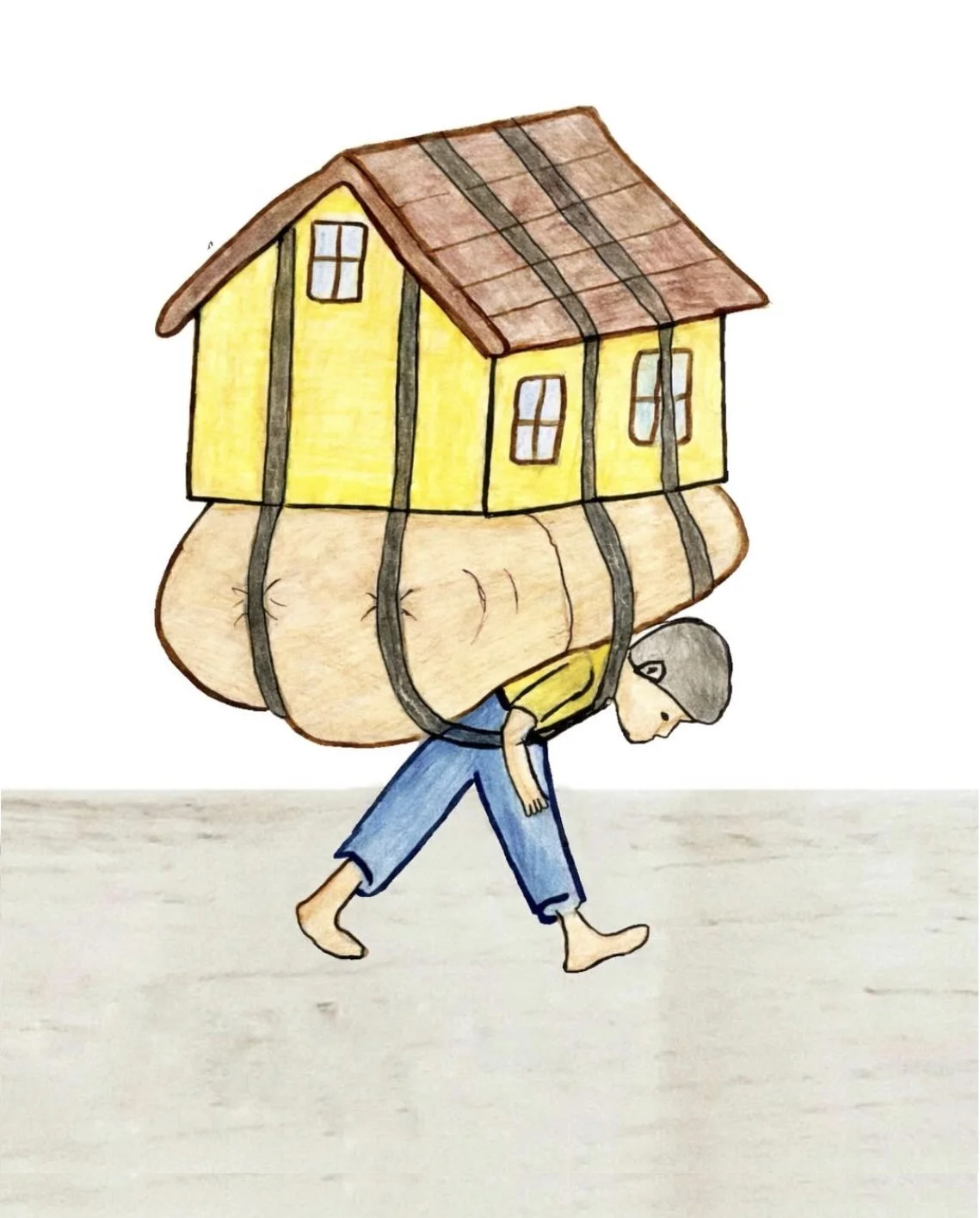
Artwork: Drawing by Ahmed Madi, 12-year-old from Gaza, 2025
An upcoming fundraising exhibition in New York, Colors That Survived, features the artwork of Palestinian children. The artworks reveal how the children experience the devastating reality of life in Gaza, and the possibility of hope for their futures. Organised by Artists Support (a non-profit that sells art to support charities artists care about, @artists_support_) in collaboration with the creators of the movie The Voice of Hind Rajab, and curated by Ms Rachel (@msrachelforlittles, an American educator who has supported the children in Gaza throughout the genocide), the artworks featured are for sale via Artists Support from January 13-30, with the proceeds going directly to the young artists. Ms Rachel wrote this about the exhibition: “The kids of Gaza and I are having an art show in New York City! I am unbelievably proud of them! They named the show, wrote their stories, shared what this means to them, and of course created incredible art.”
A high-profile supporter of the exhibition is the internationally acclaimed artist/photographer Nan Goldin. She donated an artwork for silent auction in support of the fundraiser, Ava twirling, from her Eden and After series. Goldin is one of the few high-profile artists that has openly discussed the genocide in Gaza, because doing so comes at a cost in the western art world. Regarding her support of the Colors That Survived exhibition, Goldin said this: “I can never forget the children of Gaza and I’m grateful to be allowed the opportunity to help them in some meaningful way. The war on Gaza is a war on children wiping out multiple generations, erasing the future. According to Unicef, in the last two years more than 64,000 children have been killed or maimed. I witness the constant terror the children in Gaza live with, while supporting their families and taking on adult roles, but I also see the joy in their faces; graduating from school, singing together, and learning to love and rescue animals. The children who survive will need to be nurtured and learn to hope, after living through such unimaginable horrors.”
In November 2024, Goldin had a major retrospective at the Neue Nationalgalerie in Berlin, and courageously stood up at the opening and spoke her position regarding the war in Gaza. Goldin began by saying this: “Why did I feel I have to talk tonight? This is my lifetime retrospective, but there is nothing in it from the past year, and that’s missing. The museum has kept its promise to allow me to talk, and I thank them. But they claim that my activism and my art are separate, even though that has never been the case. The last year has been Palestine and Lebanon for me. Since October 7th, I have found it hard to breathe. I feel the catastrophe in my body, but it’s not in this show.”
Goldin’s speech and the context of the art world and its response to Gaza is excellently discussed in former Artforum editor David Velasco’s essay for the magazine Equator, “How Gaza Broke the Art World”. Velasco was fired from Artforum for authorising the publication of an open letter in Artforum on 19 October 2023, from a group of culture workers in support of Palestinian liberation and a ceasefire in Gaza. It garnered 8,000 signatures of artists and art workers, Nan Goldin included. Velasco wrote this about its impact:
“Shortly after we publish the letter, all hell breaks loose. My phone, once a conduit for benign distractions, acquires the menacing nimbus of a grenade. In the car from Newark airport, I take a call from the head publicist of Penske Media, the company that acquired Artforum a year earlier, who implores me to do something acknowledging “the other side”. Our Instagram post about the letter becomes a flashpoint, generating more than 15,000 likes in a handful of hours – far more than any other post in our history. The comments feed is flooded with emojis of Palestinian flags, but also accusations of antisemitism and calls to unsubscribe. In an unprecedented move, the publishers go above the heads of the editorial department and take down the Instagram post. They remove the letter itself from the magazine’s homepage and briefly make it invisible in the search function, so that to find it you need a direct link. Shortly afterwards, they stop responding to my messages.”
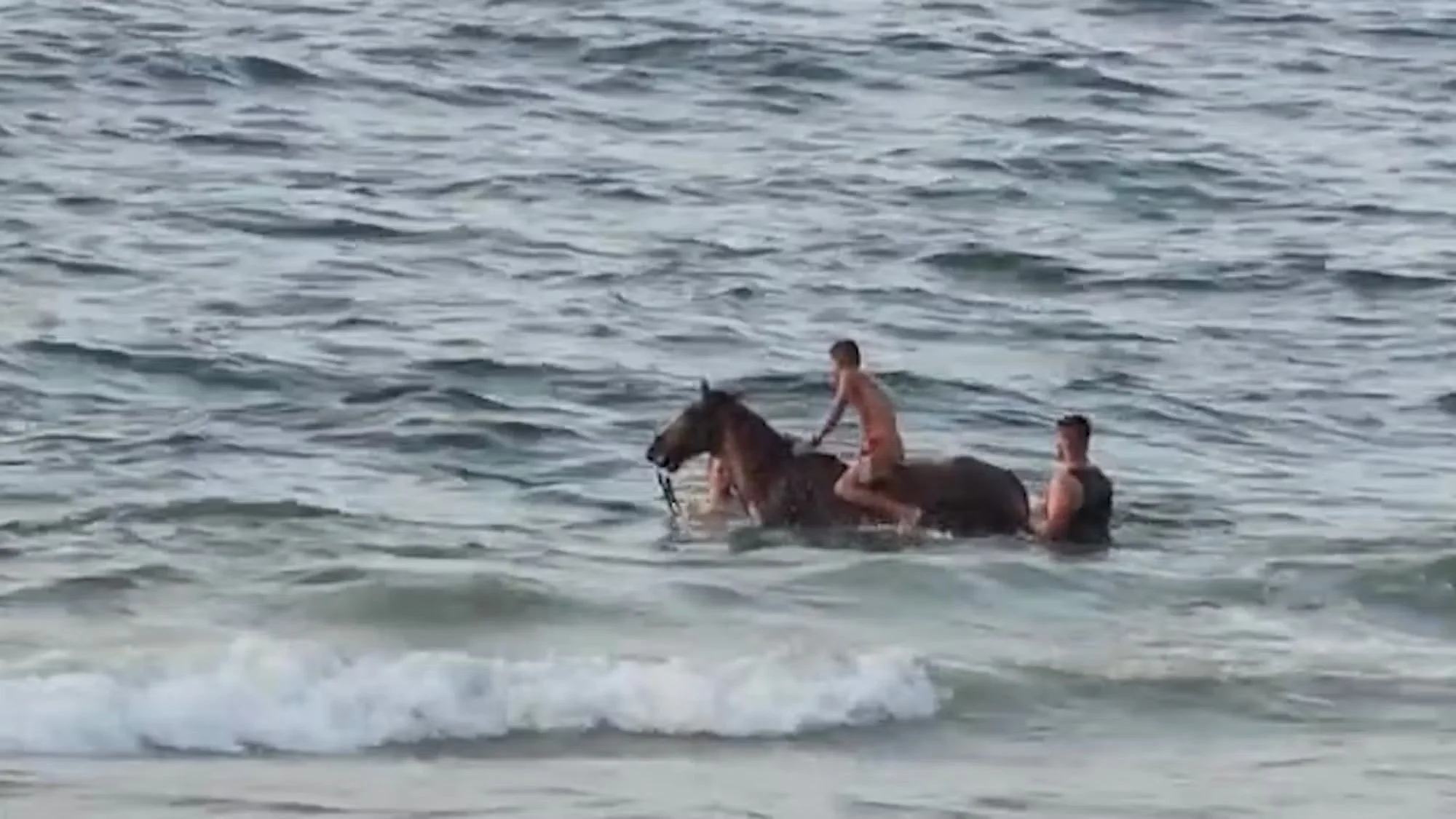
Artwork: Film still from Nan Goldin’s Gaza Notes
Velasco’s experience and those of artists, writers, academics and art workers who signed the letter is a must-read to understand the noticeable silence about Gaza the past 2 years from the western art world and academia. The article can be found here. Nan Goldin has also produced an ongoing film titled Gaza Notes that can be viewed at Equator here. Goldin wrote this about the ongoing project:
“I have no more words. This is my way of speaking out.
This piece is a work in progress that stands as a record of what has consumed me for the last two years: the need to bear witness.
This is the first genocide unfolding in real time on our phones and it is unbearable. The footage in this film is from friends who visited Palestine, the brave journalists on the ground, most of whom have been targeted, and the people living it. It remains silent because music is too directive and without sound people are forced to look more intently. The film loops because what it is showing is constantly repeating. It remains unfinished because it is not over.
It’s not the time for denial and amnesia.”