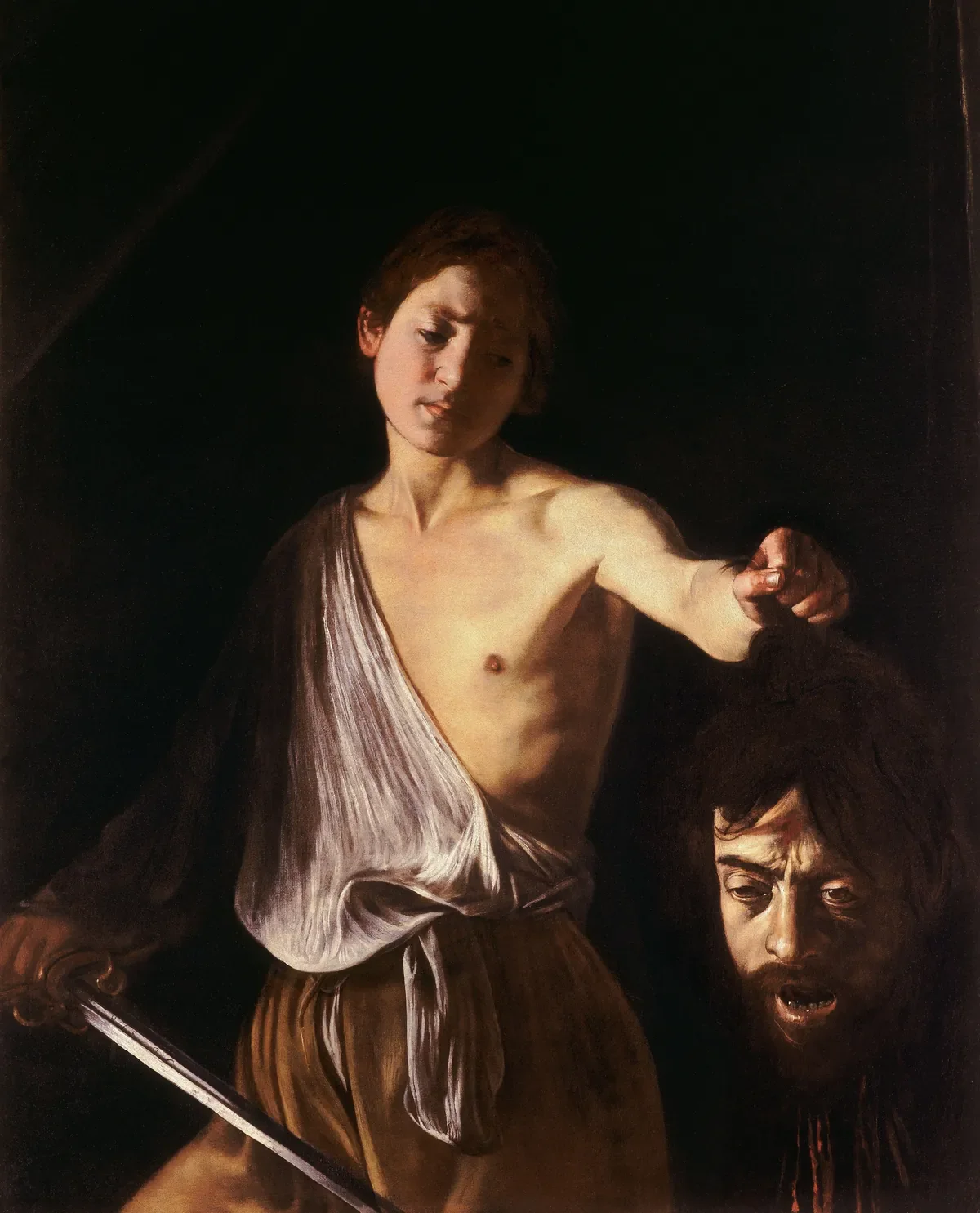
Artwork: Caravaggio, David with the Head of Goliath, 1610, Galleria Borghese, Rome
In a recent Red Hands File letter, singer/songwriter Nick Cave answered questions relating to the relationship between artists and their artwork, and whether you can divorce the two or not, as well as songwriting and AI. Given all the issues regarding AI and art that I’ve discussed in posts, I thought it was worth sharing as Nick is a high-profile artist, and what he has to say on the issue is important:
“Dear Nuno and Catherine,
I have indeed spoken about separating the art from the artist a number of times in these Files, yet the question persists and remains an ethical tension for many people. How is it that some of the most beloved and beautiful works of art can be created by people of decidedly dubious character? We look at a Caravaggio in a museum, a work of spiritual radiance but created by a murderer. We think we should perhaps turn away, but beauty holds us. We stand awed and baffled that even in such a character, a point of goodness exists from which great art can spring.
Nuno, we cannot separate the art from the artists, for they are as inseparable as the waves from the sea they rise from. That may be an uncomfortable truth for some but, for me, the matter was settled.
Until now. With the advent of song generation platforms, the thorny issue has been upended. At last, the artist can be separated from the art. Not just that, the artist – that flawed, messy, broken, woeful, joyful problem – can be removed from the equation altogether, like so much dross. Suno, the Great Cancellator, which has never loved or laughed or grieved, never experienced joy or loss or heartbreak, never felt boredom or its adjacent epiphany, produces an imitation of the soul – a song – in fifteen seconds flat. This is an affront to any songwriter who has lived and struggled in this world and earned the right to create a song.
Artificial Intelligence, Catherine, may save the world, annihilate it, or do something in between. I don’t know. But song generator platforms are, in my view, indicators of this nascent technology's demonic potential to hollow out human endeavour and sever our connection to the divine. They mock creation itself by rendering humanity unnecessary, taking the fruits of human striving and reducing them to mere products. It is, perhaps, our final, most soul-destroying humiliation.
For those eager to rid the world of problematic artists – for these censorious forces remain persistent – it is surely cause for celebration, as these platforms promise to rid the world of artists altogether.
Love, Nick”