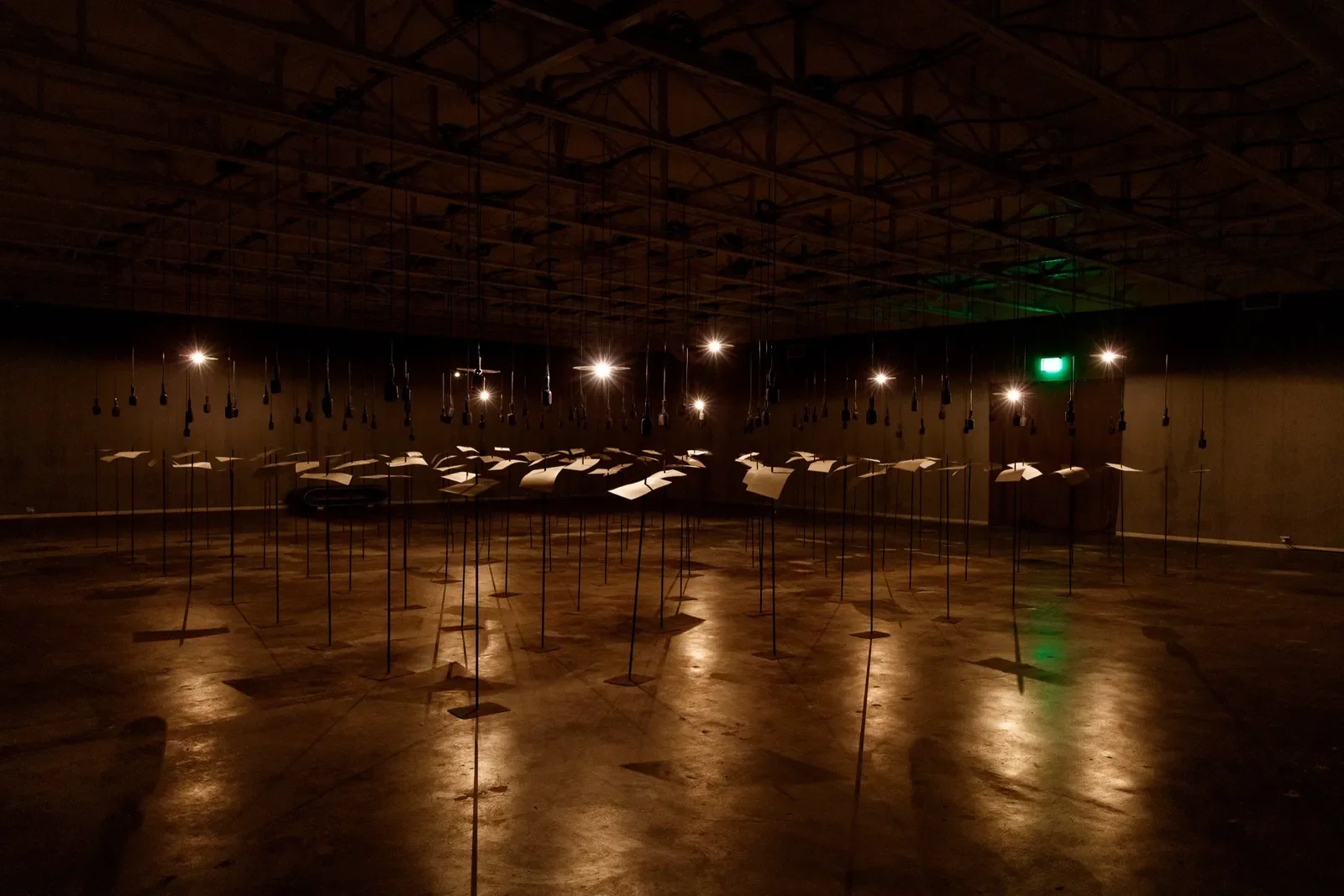
Artwork: Shilpa Gupta, For, In Your Tongue, I Cannot Fit, 2017-18
Currently showing at Museum Voorlinden in Wassenaar, Netherlands, is Mumbai-based artist Shilpa Gupta’s multi-channel sound and object-based installation For, In Your Tongue, I Cannot Fit. Originally created in 20017-18, it is now part of the Voorlinden collection, and is a symphony of 100 dissident voices of poets from across the globe such as Malay Roychoudhury, Ashraf Fayadh, Huang Xiang, Osip Mandelstam, Mahmoud Darwish, Martin Carter, and Faiz Ahmad Faiz. All were censored by officials of various states for their writing and their beliefs.
The title of the installation comes from a poem by the Azerbaijani poet Ali Imaduddin Nasimi (1369-1417), better known by his pen name Nasimi. His writing was considered blasphemous and it is said the religious authorities seized and flayed him alive. The installation is comprised of white pieces of paper with the lines of poems and works of these writers impaled on spikes beneath speakers, out of which a cacophony of voices speak the words written on the paper in different tongues—Hindi, Chinese, Azaeri, Arabic, and English. One such poet, Palestinian Dareen Tatour, tore the zipper of her jacket to write on the walls of her prison. Another, Irina Ratushinskaya, a Christian, was arrested due to Soviet anti-religious persecution and was imprisoned in the Gulag. Ratushinskaya scratched her verse on soap, memorized it, and then used the soap to wash. She then wrote her verses on cigarette papers, and smuggled them out of prison. Chinese calligrapher and poet, Huang Xiang, came to prominence post-Cultural Revolution and was imprisoned on several occasions between 1958-1995 for his advocacy of human rights, democracy and freedom of expression. Xiang wrote this poem, Singing Alone in 1962:
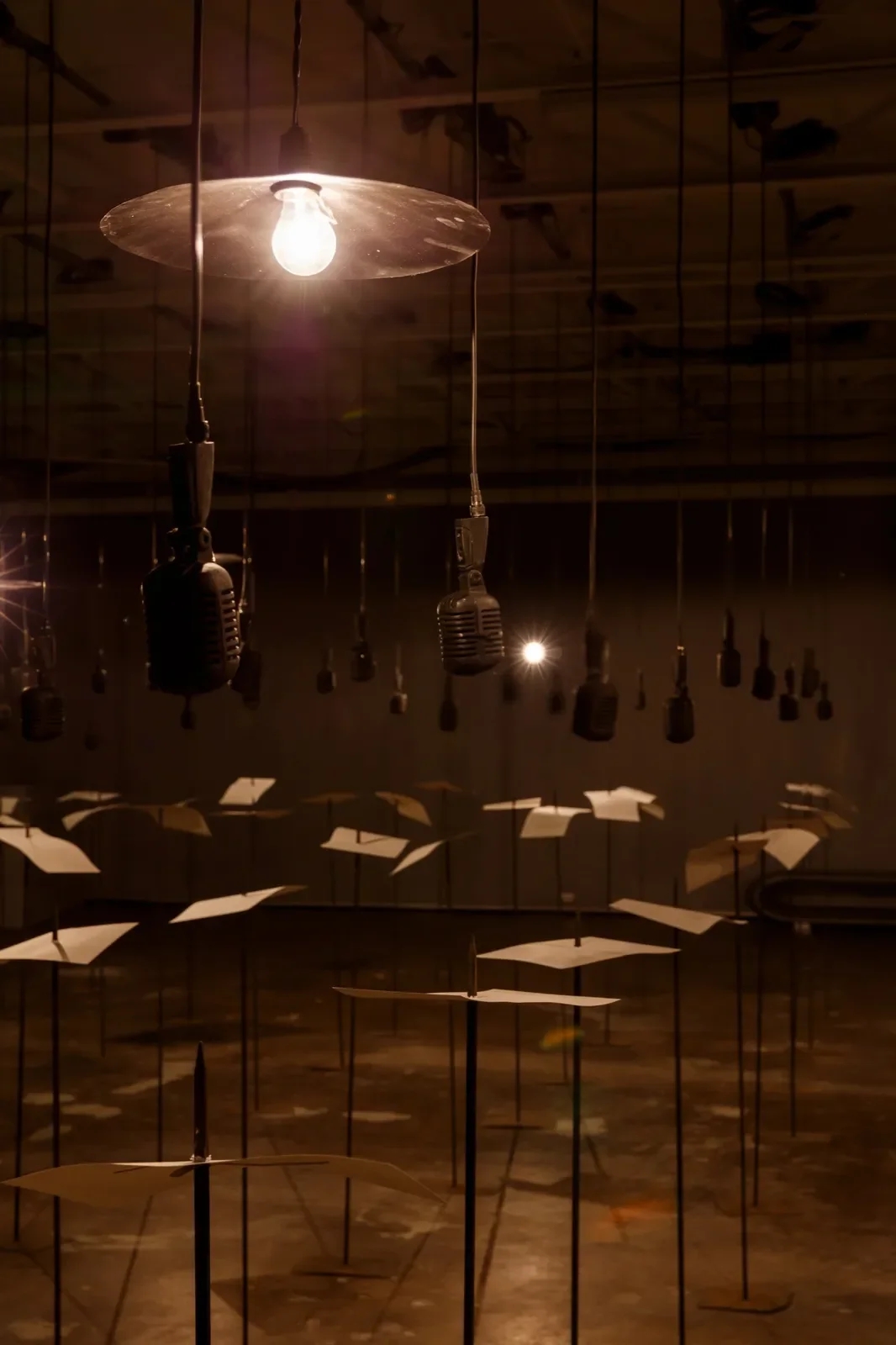
Artwork: Shilpa Gupta, For, In Your Tongue, I Cannot Fit, 2017-18
Who am I
I am a lonely soul of a waterfall
A poem
Dwelling forever in Solitude
My drifting song is a dream’s wandering
Trace
My only audience
The still
(translated by Andrew G. Emerson)
By giving the poets back their voice, Gupta emphasises the issue of freedom of expression and the importance of the spoken and written word, which those in power might fear and then suppress (the sale of TikTok to pro-Zionist Larry Ellison comes to mind, and the now heavy censorship of any criticism of Israel on the app). As she said: “Often, as it is happening right now, the voices of the truth cause discomfort and are cut off, yet the echo remains and continues to be heard.” Gupta also said this at the installation’s inaugural showing: “The exhibition brings attention to the fragility and vulnerability of our right to freedom of expression today. Throughout history, poets from across geographies have been incarcerated for their work, and there are still many unsettling instances of this taking place today.”